Hiragana and Katakana:
Free Downloads

Download Your Hiragana & Katakana Survival Kit! 🎁
📋 Hiragana & Katakana Cheat Sheets
📝 Katakana Practice Worksheet
📝 Hiragana Practice Worksheet
🃏 Printable Kana Flashcards
📖 Workbook Excerpt featuring Dr. Moku’s legendary mnemonic system
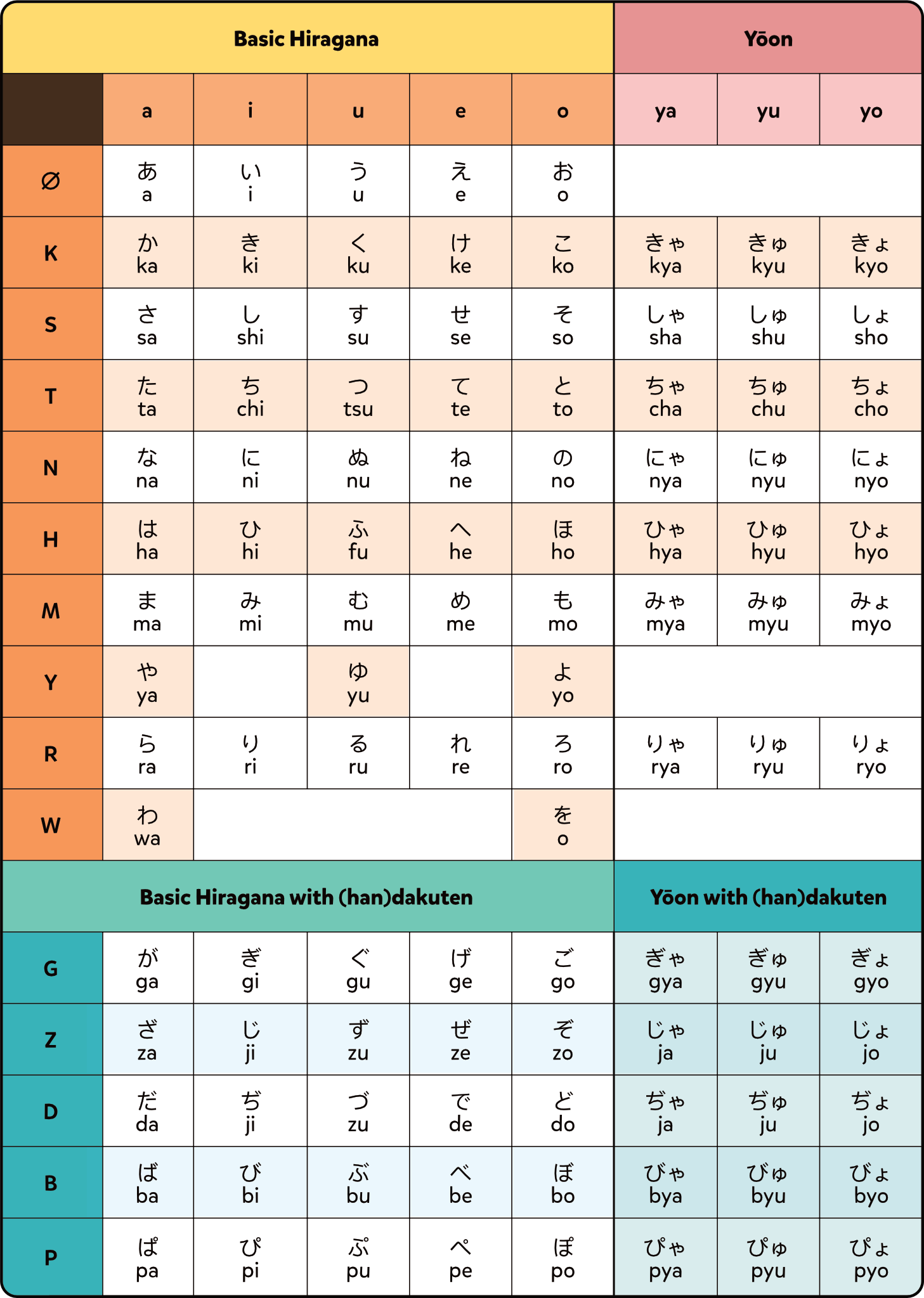
Hiragana and Katakana Cheat Sheets
This handy Hiragana and Katakana reference sheet is a free pdf download.
Print it out, slide it under your keyboard, laminate it and gaze at it in the shower. Whatever works!
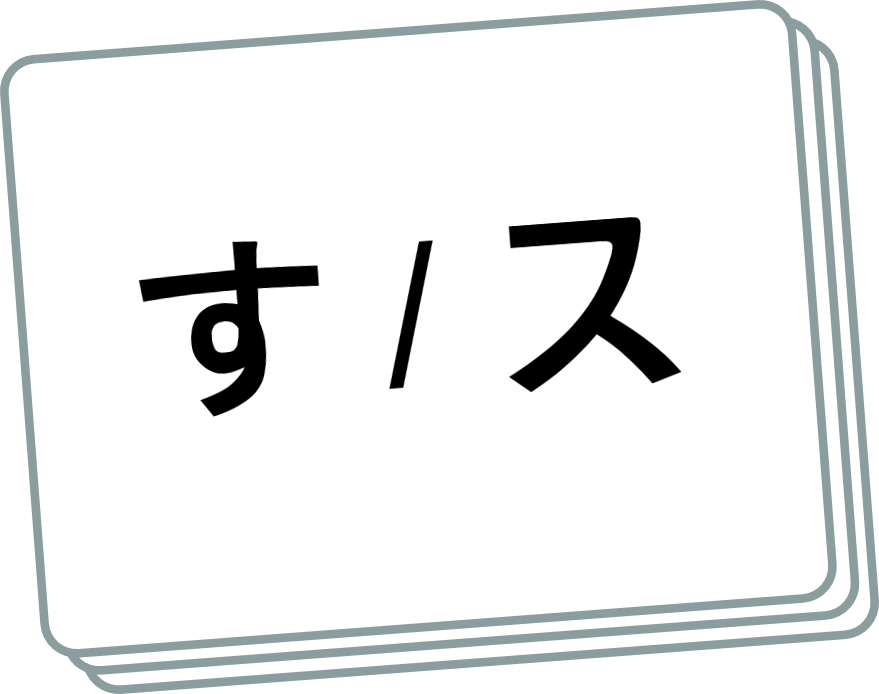
Printable Hiragana and Katakana Flashcards
You know we make big, glossy flashcards for learning Japanese? They’re packed with everything you need. But if you want to go ‘homemade’, then these printable flashcards are for you!

Hiragana & Katakana Writing Practice Worksheets
Practice your Japanese handwriting with these free, printable worksheets.
Each Hiragana and Katakana character is broken down by stroke order to help you learn
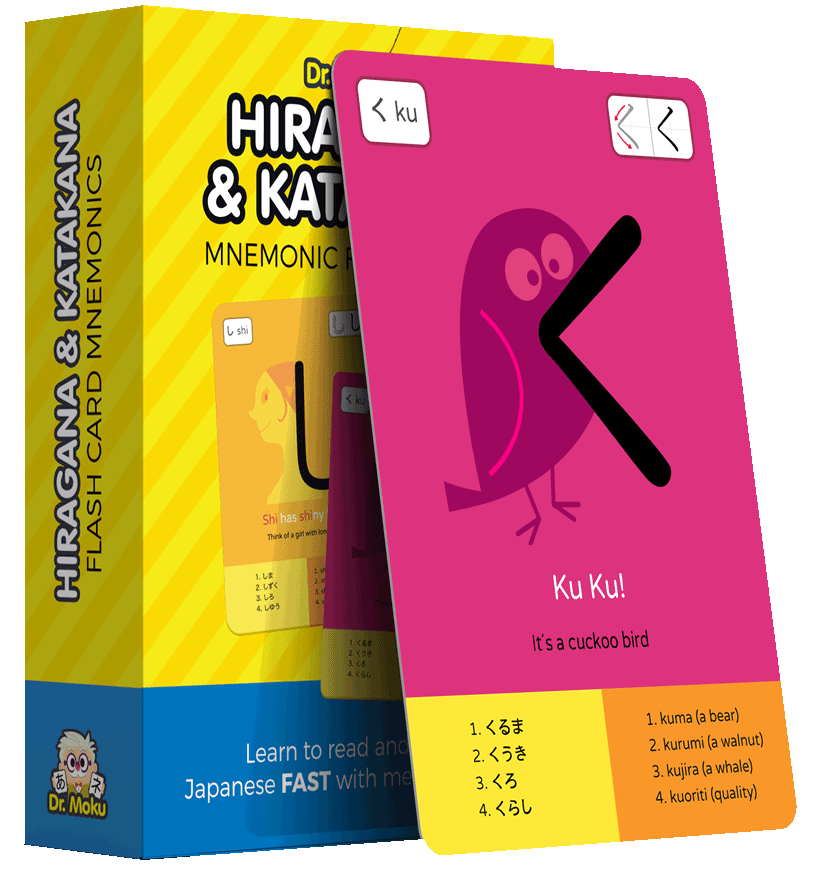
Physical Flash Cards?
Learn Hiragana, Katakana and Kanji with our unforgettable mnemonics
Our Hiragana Chart is split into two: Basic and Modified Hiragana
Hiragana and Katakana each consist of 46 basic characters which can be modified slightly to cover every syllable you need. A lot of Hiragana symbols resemble Katakana symbols so you are already on your way to mastering that too.
'Modified' is catch all term which you can use while starting to learn Japanese but you should learn the proper names and their functions.
First we have DAKUTEN which are the two small strokes that change the sound of some Hiragana characters.
For example: The ‘k’ sound becomes a ‘g’ sound ( example: ka か becomes ga が )
Then we have HANDAKUTEN which is little circle which appears above the 'h' set and this transforms changes ‘h’ to ‘p’. (example: ha は becomes pa ぱ )
YŌON uses smaller than usual versions of one of the three ‘y’ kana, ya, yu or yo to make a contracted word . For example kyō ( meaning “today”) is written きょう with the smaller ‘yo’ and kiyō, (meaning “skillful”) , which is written きよう has a full-sized ‘yo’.
SOKUON is a small tsu (っ or ッ in either Hiragana or Katakana respectively). This small tsu means that the consonant in the next character is ‘doubled’, and a slight pause results. For example, in the word ‘Yukkuri’ (ゆっくり), the word is pronounced ‘yu’ (a slight pause ) ‘kuri’. The っ (tsu) represents this slight pause.
CHŌONPU (rarely used in Hiragana) appears as a ー (a long dash shape) indicates the use of a long vowel sound in the preceding character.
Still struggling to learn Hiragana and Katakana?
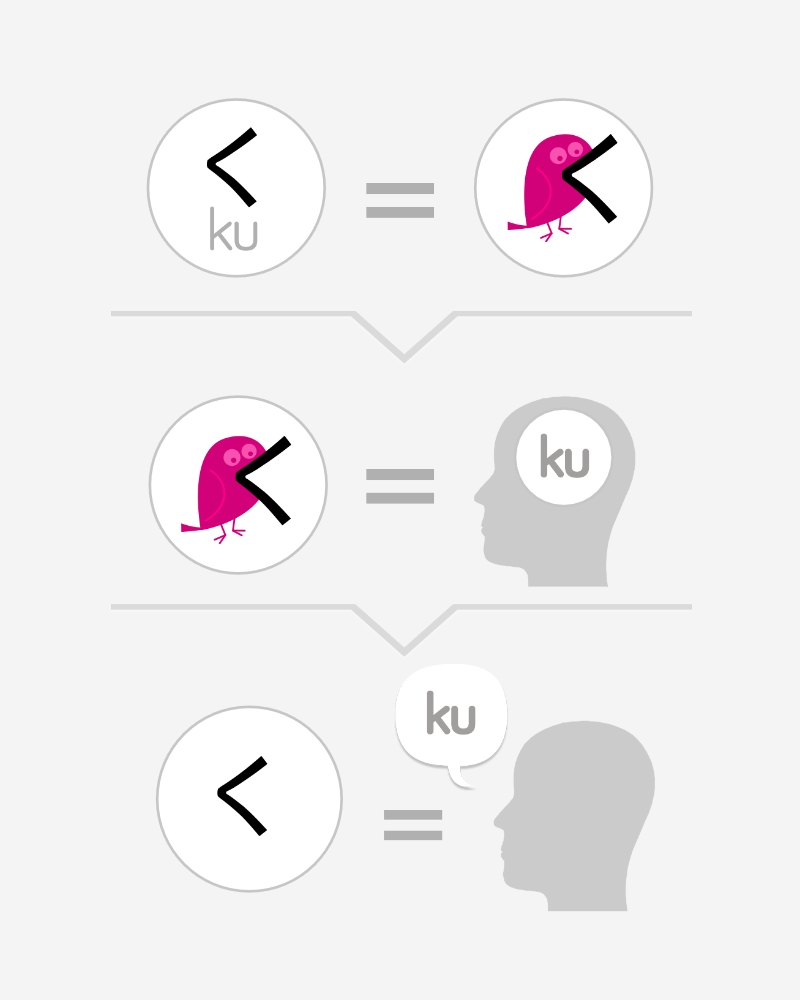
Some people are visual learners and they have problems with abstract concepts such as remembering the sounds and shapes of foreign alphabets. By using mnemonics (memory tricks that use visual and verbal cues), you can rapidly improve your learning speed and retention.
You can learn Hiragana and Katakana in under a day with Dr. Moku, some people have managed to learn Hiragana or Katakana in just one hour by using our mnemonic learning tricks.